6 hr
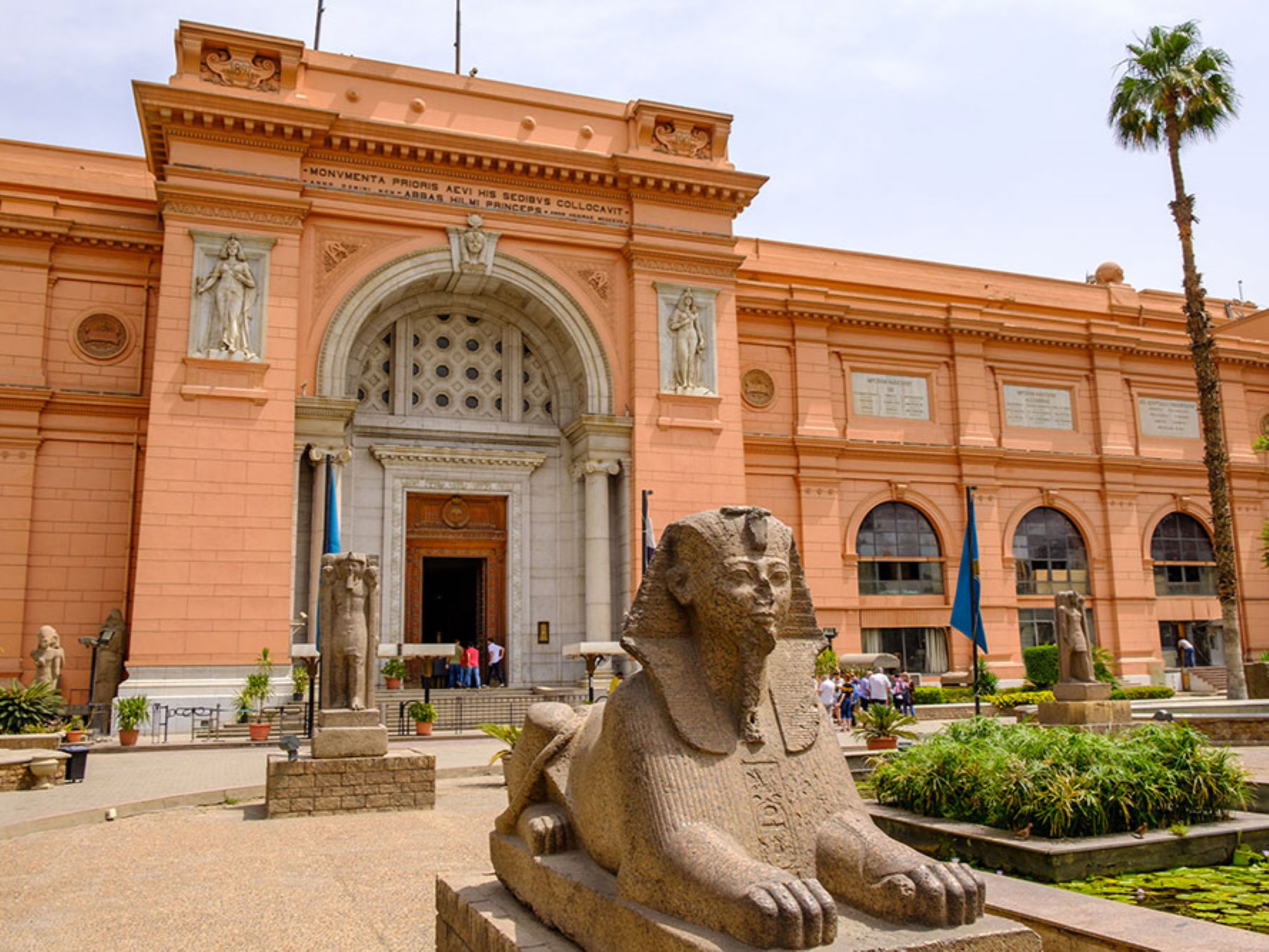
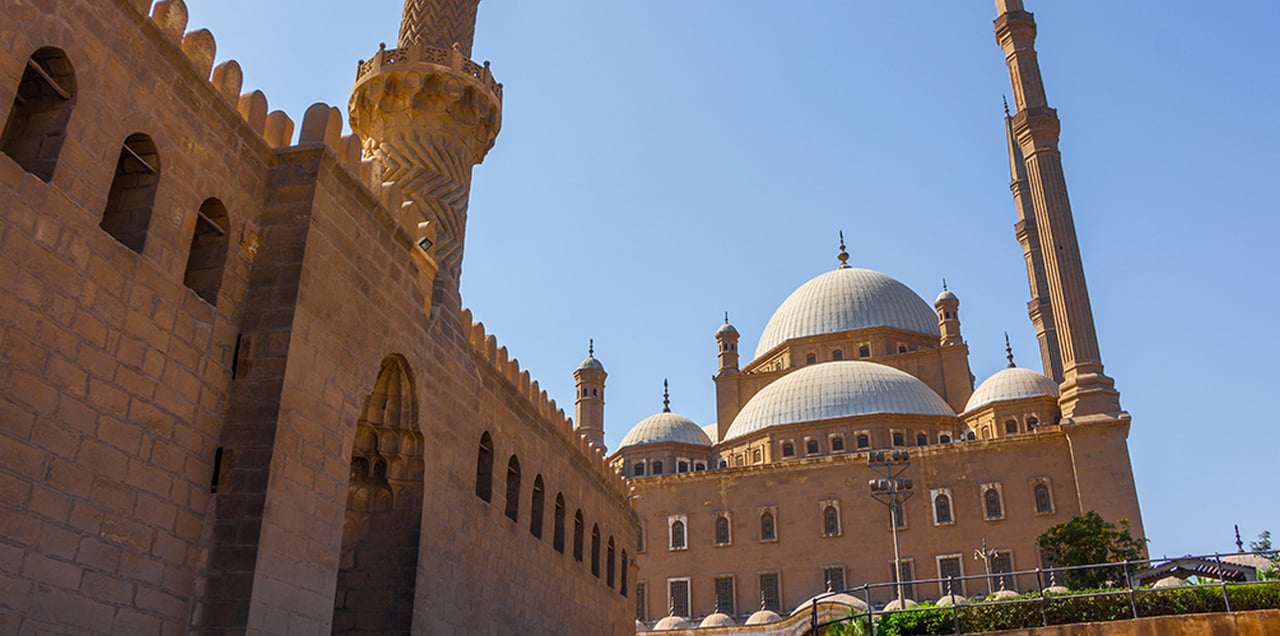
Cairo Historical Highlights: Museum, Citadel & Old Quarter
- Expert local guide
- Small group
- Skip-the-line access
- Free cancellation
Cave Church & Garbage City — Coptic Sanctuary & Community Tours
Carved chapels beneath Mokattam, a working quarter reborn
Compare fares, pick the fit — all bookings are mobile-voucher and eligible for free cancellation where shown.
6 hr
7 hr
8 hr
Visitors planning a cave church and garbage city tour often choose between independent exploration or a guided experience to navigate the unique landscape of Mokattam Mountain. While entry to the Monastery of Saint Simon is free, booking a structured visit helps ensure a seamless journey through the surrounding Coptic and Islamic Cairo landmarks.
| Independent Visit Self-Guided Access |
Top pick Guided Day Tour Private Transport |
|
|---|---|---|
| Entrance Fee | 0 EGP | 0 EGP |
| Access Level | Public areas | Comprehensive site access |
| Logistics | Independent | Private vehicle included |
| Best for | Budget travelers | First-time visitors |
| See tickets & prices |
Verdict: For the most reliable experience on your cave church and garbage city tour, we suggest selecting the guided tour option to simplify local navigation and transport.
Worth it for culture seekers, skippable for ancient Egypt focus
The cave church and garbage city tour offers free entry to the Monastery of Saint Simon the Tanner, carved into Mokattam Mountain and decorated with dramatic biblical reliefs. You'll witness Manshiyat Naser's recycling community at work—an honest look at Cairo's informal waste economy and Coptic heritage. Arrive between 09:00 and 12:00 for the best light and cooler temperatures. The visit itself takes roughly 90 minutes, and donations to the community are welcomed. If your Cairo itinerary prioritizes pharaonic sites—pyramids, the Egyptian Museum, Saqqara—this tour sits outside that narrative. But for travelers wanting to see modern Coptic life, grassroots sustainability, and a lesser-known pilgrimage site, the cave church and garbage city tour delivers authentic depth. The bookable heritage tours on this page focus on the Citadel, Old Cairo, and ancient monuments, so you'll need to arrange this separately or add it as a custom stop.
Bottom line: Book this if modern faith and community resilience interest you as much as ancient temples—otherwise, stick to the Citadel and museum circuits.
The cave church and garbage city tour offers an immersion into a unique modern social community, whereas the Coptic Cairo historic route focuses on antiquity and ancient ecclesiastical landmarks. These Cairo landmarks attract different types of travelers, with the monastery complex providing a raw community perspective compared to the curated museum environment of the Old City.
|
Top pick Cave Church / Garbage City |
Coptic Cairo Historic District | |
|---|---|---|
| Focus | Modern community life and faith | |
| Primary activity | Observing recycling systems and mountain chapels | |
| Intensity | Moderate with steep terrain | |
| Typical duration | 2–3 hours | |
| Entrance cost | 0 EGP (Donations welcome) | |
| Booking requirement | Flexible for cave church and garbage city tour tours | |
| See tickets & prices |
Verdict: Choose the cave church and garbage city tour if you seek cultural insight into Cairo’s local economy, or select the Coptic Cairo route if you prefer organized history and classic sightseeing via cave church and garbage city tour tickets.
Hand-picked experiences loved by thousands of travelers
3 to 8 hours
Free Cancellation
Journey through pharaonic history from the Great Pyramids to Egypt's ancient capitals with flexible tour options
3 to 8 hours
Free Cancellation
Uncover ancient treasures at Cairo's renowned museum, then tailor your day with visits to historic sites
5 hours
Free Cancellation
Explore ancient Christian sites and the remarkable mountain cave churches with hotel transfers
3 - 8 hours
Free Cancellation
Journey through millennia of Egyptian history from Giza's iconic monuments to bustling bazaars
1 full day
Free Cancellation
Journey from Hurghada to explore ancient monuments, Ottoman architecture, and spiritual landmarks
5 hours
Free Cancellation
Journey to the massive Monastery of Saint Simon and explore Egypt's oldest Christian sanctuaries
3 - 8 hours
Free Cancellation
Explore Egypt's iconic pyramids with flexible itineraries including museum visits and Nile sailing
6 hours
Free Cancellation
Explore ancient Christian sites, visit cave sanctuaries carved into Moqattam Mountain, and sail the Nile
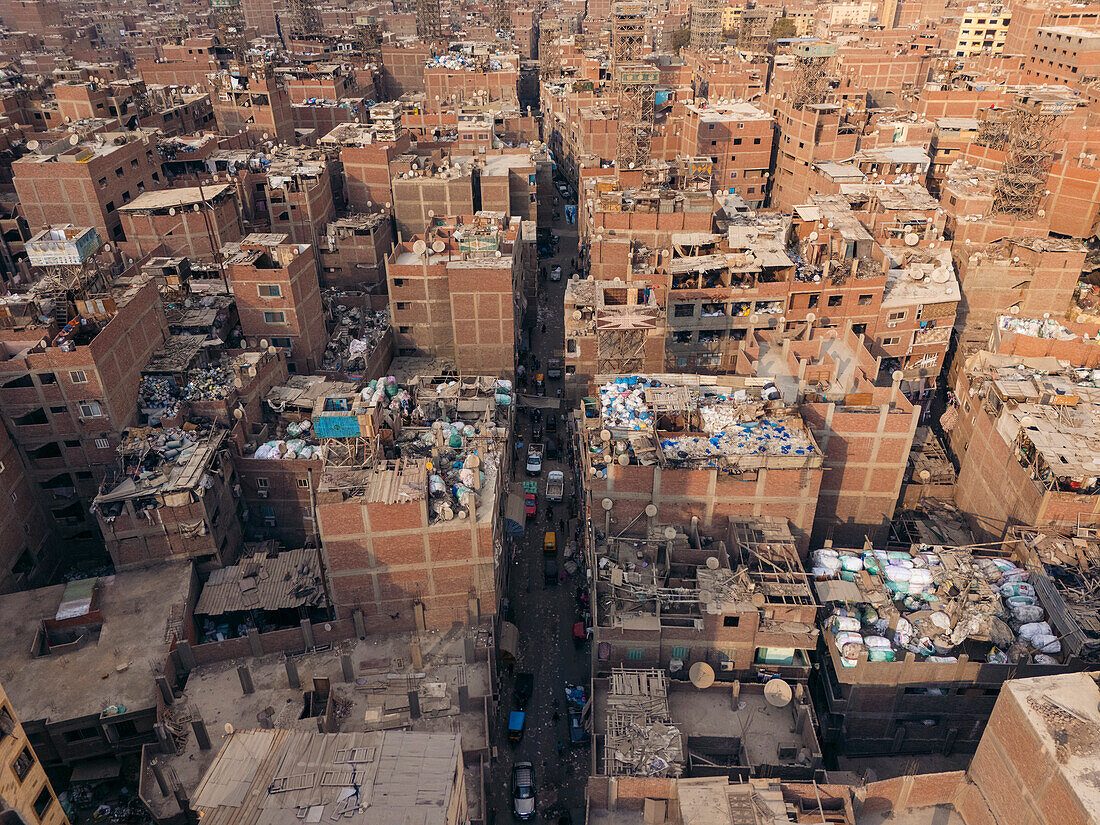
You leave central Cairo by private vehicle or guided minibus, crossing the elevated Autostrad before turning east toward the Mokattam escarpment. The road narrows as you enter Manshiyat Naser, workshops lining both sides where families sort recyclables beneath tarpaulin canopies.
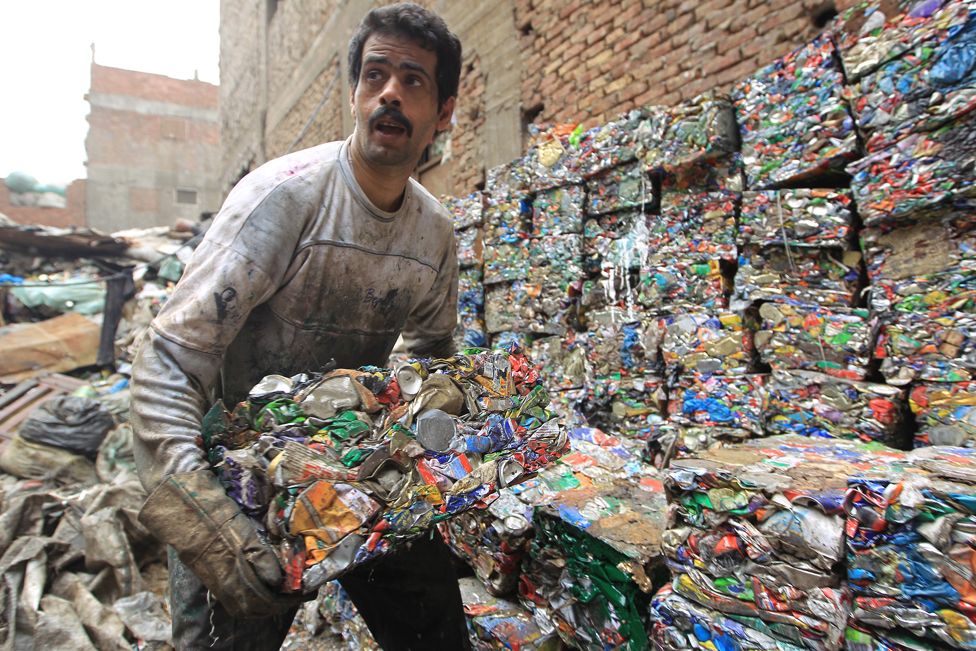
Your guide explains the Zabbaleen recycling system as you pass stacked bales of plastic bottles waiting for transport to reprocessing plants.
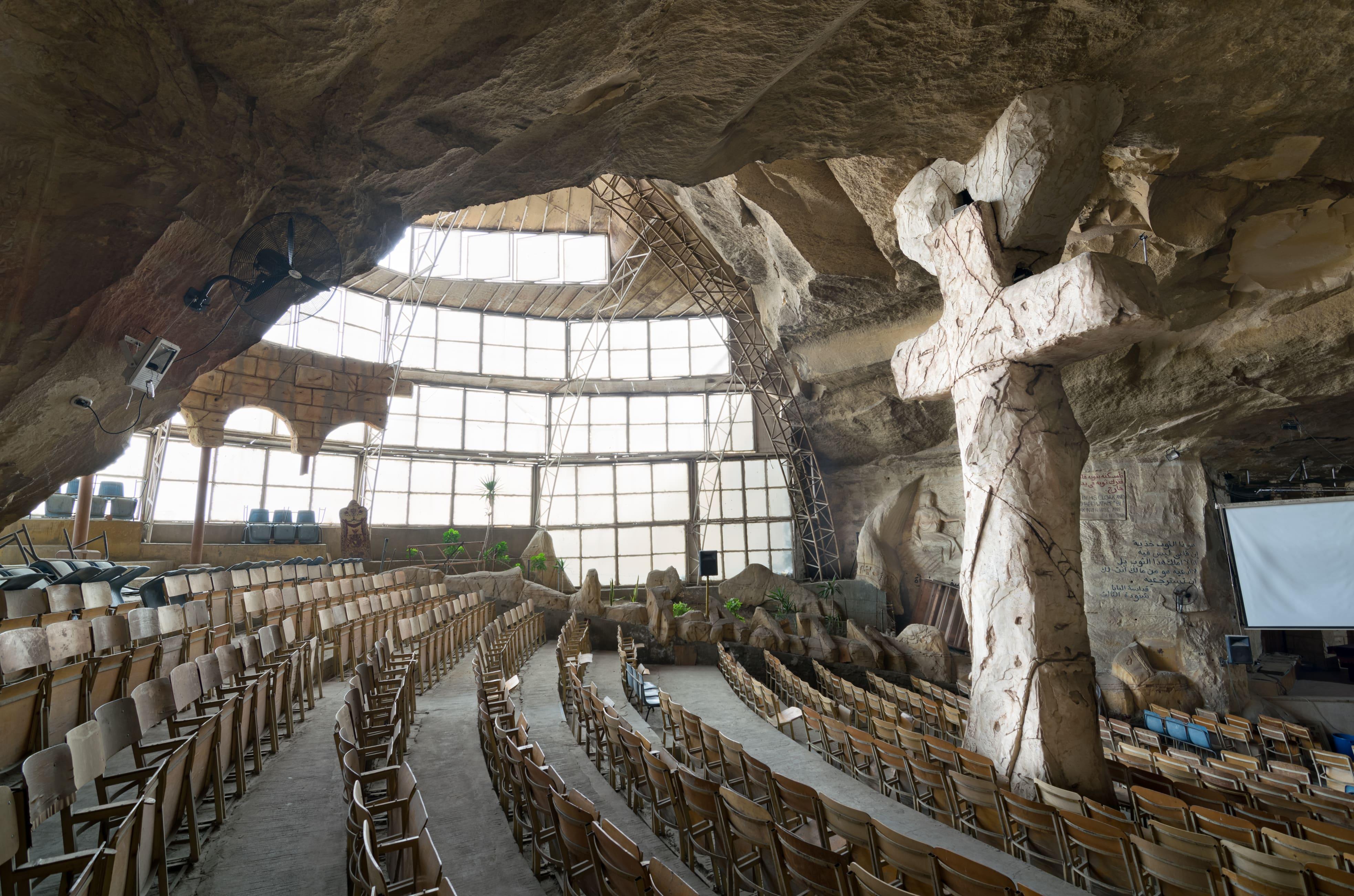
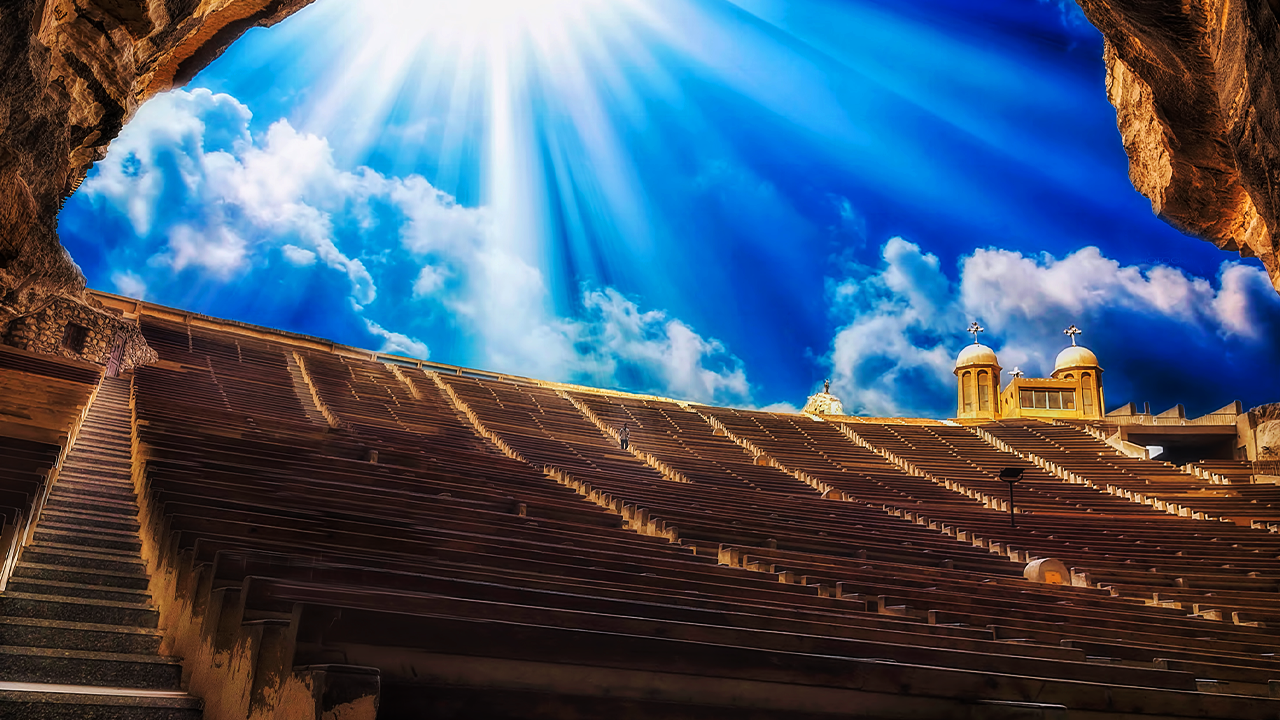
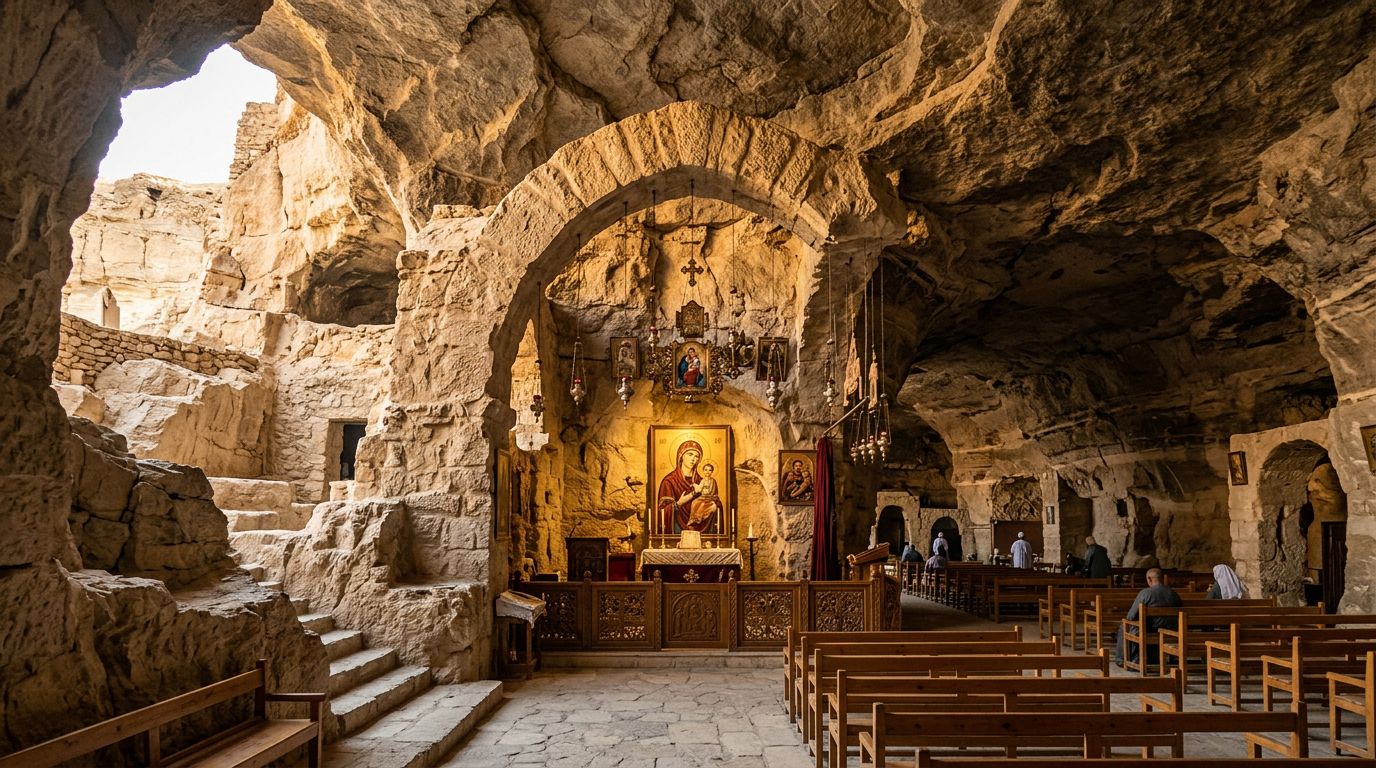
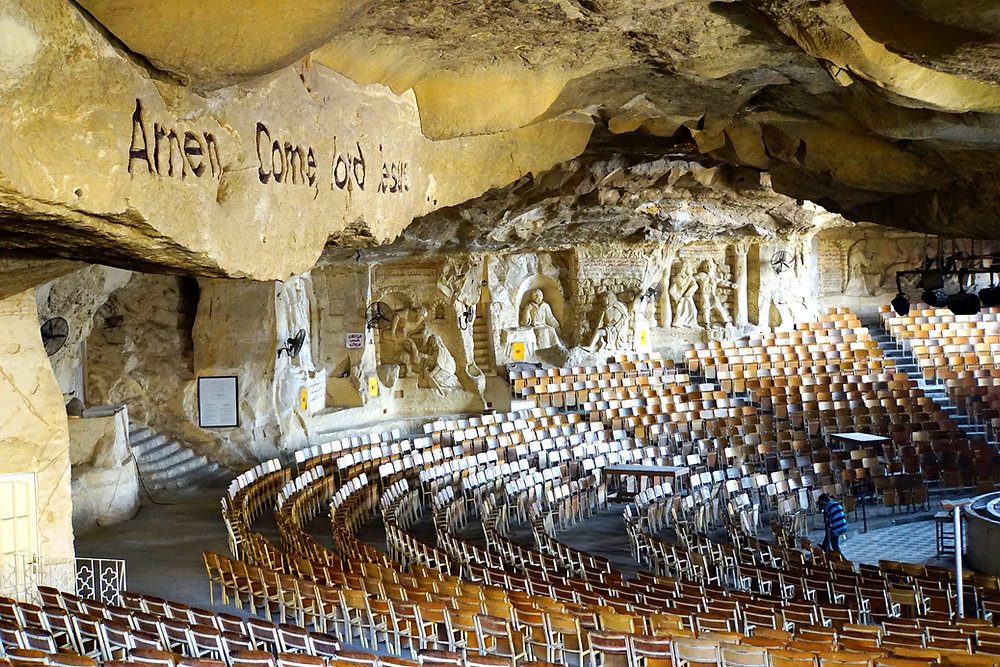
The vehicle climbs a steep unpaved track to the monastery entrance, where you continue on foot through a carved archway. The temperature drops as you step into the main sanctuary, its vaulted stone ceiling rising 17 meters above rows of wooden pews. You walk the perimeter, pausing at Czerkawski's frescoes depicting the Virgin Mary and Christ Child sheltered in desert caves. Your guide points out Coptic inscriptions chiseled into the walls, their angular script dating to the monastery's early construction phase.
You ascend stone steps to the upper chapels, each dedicated to a different saint, natural light entering through rock-cut windows overlooking the Cairo skyline. The open-air amphitheater lies at the summit, its tiered stone benches facing west toward the city's sprawl. You spend time photographing the chapels' carved details and the view across Manshiyat Naser before descending to the entrance plaza, where a small shop sells handmade crafts produced by local cooperatives.
All the details about your upcoming adventure in one place
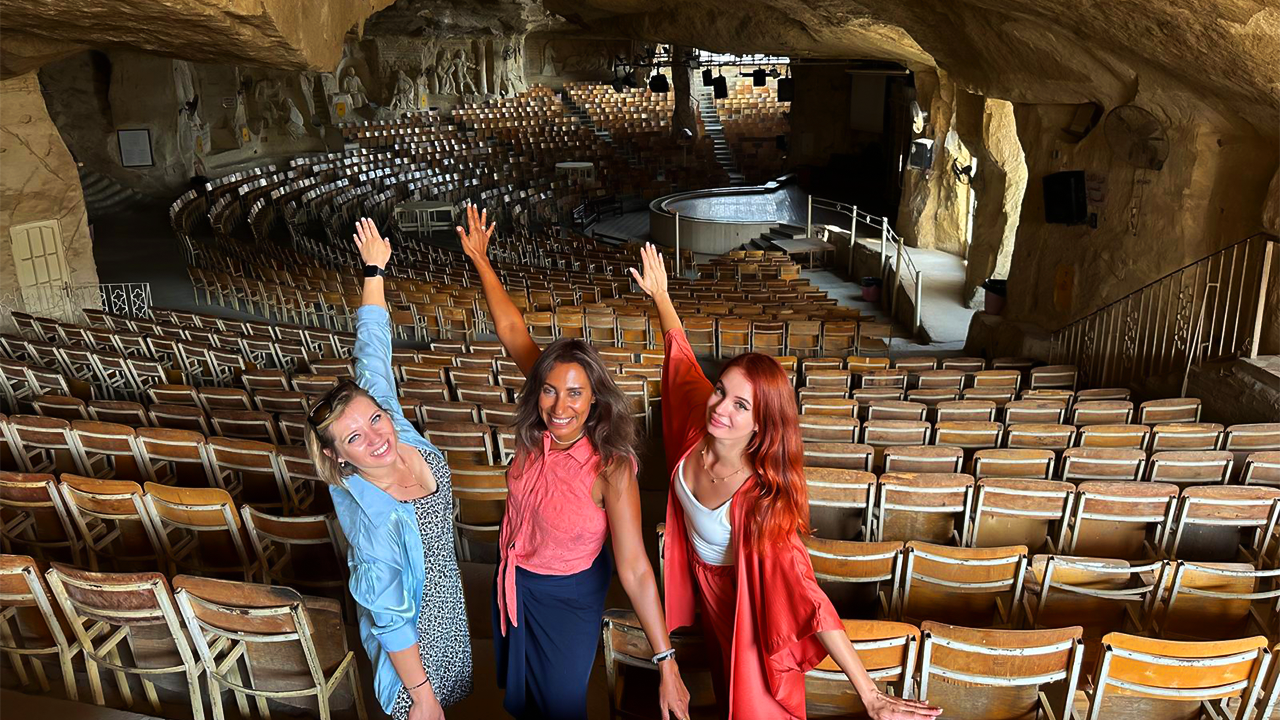
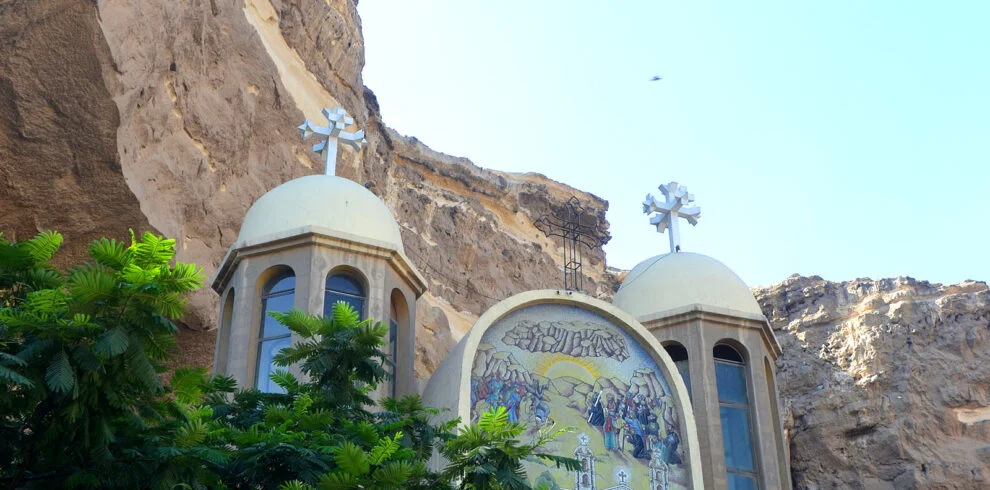
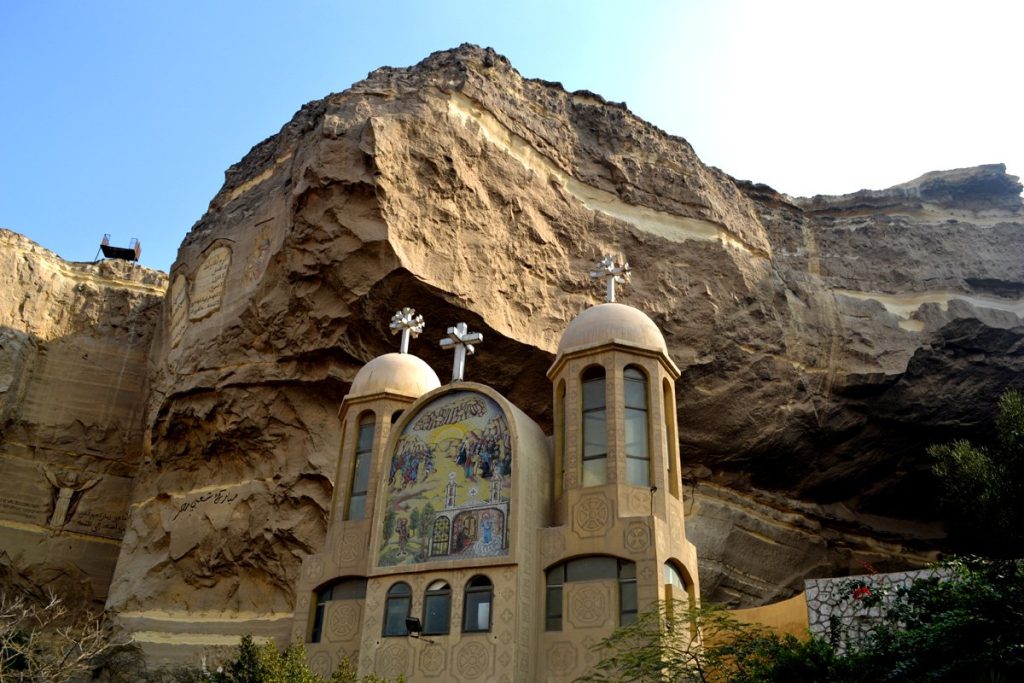
The Monastery of Saint Simon the Tanner occupies seven hand-carved chapels hollowed from the Mokattam limestone cliffs above Manshiyat Naser, a quarter known internationally as Garbage City.
Construction began in 1975 when Coptic Christians, many working in Cairo's informal waste-sorting economy, excavated the hillside to create one of the Middle East's largest cave churches. The main sanctuary seats 20,000 beneath a natural stone ceiling, its walls incised with Coptic crosses and Bible verses in Arabic and Coptic script.
The site honors Saint Simon, a tenth-century Coptic tanner whose prayers reportedly moved the Mokattam hills during the reign of Caliph al-Muizz li-Din Allah, validating the Christian community's presence in Fatimid Cairo. Today the monastery functions as both pilgrimage destination and neighborhood anchor for Manshiyat Naser's Zabbaleen population, Coptic families who collect, sort, and recycle an estimated 80 percent of Cairo's municipal waste. The quarter's narrow lanes thread between multi-story workshops where plastic, metal, glass, and paper are separated by hand before resale to Egyptian manufacturers.
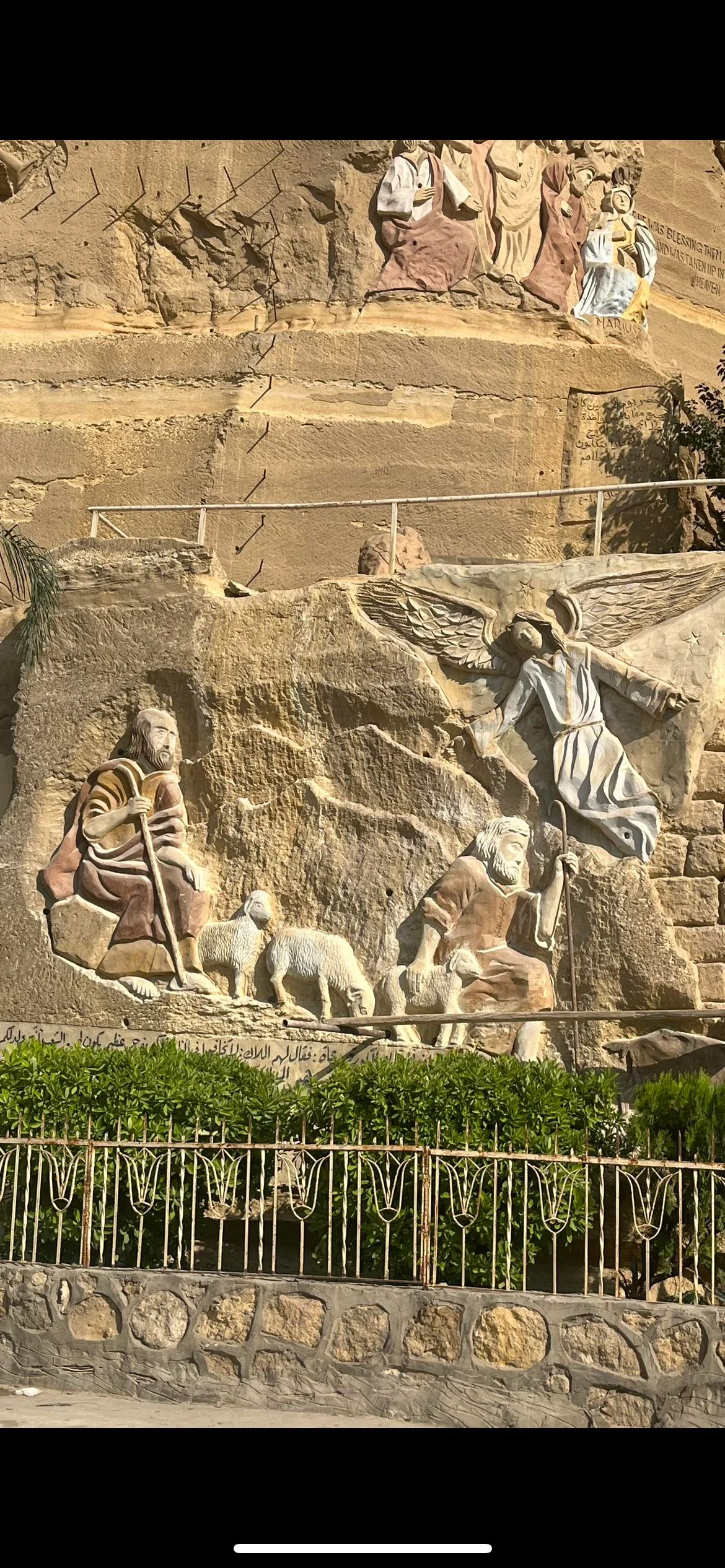
Visitors ascending the unpaved switchbacks from Manshiyat Naser's lower streets pass workshops stacked with baled cardboard and crushed aluminum, the rhythmic clatter of sorting machines audible through open doorways. The cave church tour reveals frescoes depicting the Flight into Egypt and the Holy Family's refuge in the Mokattam caves, painted by Polish artist Mario Czerkawski between 1991 and 2001. Sunlight filters through carved openings onto stone benches facing a central altar, the air cooler than the Cairo plain below. An amphitheater cut into the cliff hosts annual Coptic festivals each October, drawing pilgrims from across Egypt's Christian diaspora. The monastery remains donation-funded, with no formal entrance fee, though contributions support community literacy programs and medical clinics serving Manshiyat Naser's 60,000 residents.

Seven hand-carved chapels hollowed from the Mokattam limestone cliffs house one of the Middle East's largest cave churches.
Visitors should dress modestly out of respect for the religious nature of the site. Shoulders and knees must be covered, and women are advised to carry a scarf for head covering.
Small daypacks are generally permitted. Security personnel may perform routine bag checks at the entrance of the cave church and garbage city tour complex.
Photography is permitted for personal use throughout the grounds. Respect worshippers and avoid capturing images of individuals without their permission during your cave church and garbage city tour.
The site welcomes families, though the terrain is challenging for strollers. Parents should supervise children closely due to the industrial activity in the surrounding neighborhood.
The site is carved into the mountain, resulting in uneven paths and inclines. While main areas are reachable, some sections require navigation of stairs and steep terrain.
There are no dining facilities within the church complex itself. Visitors should carry their own water bottles, as the area is hot and requires significant walking.
Opening Hours
09:00–17:00
Address
Mokattam Mountain, Manshiyat Naser, Cairo Governorate, Egypt
Entry Fee
0 EGP
Arrival
09:00–12:00
Storage
Not available on-site
Navigation
Use GPS coordinates for Mokattam Mountain
Taxi
The most reliable method to reach the cave church and garbage city tour is by private taxi. Ensure the driver is familiar with the Mokattam route.
Car
Driving to the site requires navigating the dense streets of Manshiyat Naser. Parking is available near the entrance gate.
As this is a community site with 0 EGP entrance, there are no cancellation fees for general entry. If booking a guided cave church and garbage city tour through an operator, verify their specific refund terms.
Recommended time
2-3 hours
Planning a cave church and garbage city tour requires navigating the unique urban landscape of Mokattam Mountain, Manshiyat Naser. Most visitors find that two to three hours is sufficient to explore the monastery complex, though those seeking in-depth interactions with the local Zabbaleen community should allocate extra time. Securing cave church and garbage city tour tickets is not necessary as entry is free, yet utilizing reputable cave church and garbage city tour tours helps navigate the labyrinthine streets efficiently. We recommend arriving during the 09:00–12:00 window to enjoy cooler temperatures before crowds increase. While traffic in Cairo landmarks can be unpredictable, the site itself remains accessible throughout the day for those managing their own transportation.
Crowd levels through the day
Weather · crowds · average price — dots go green to amber to red as each metric rises.
March to May offers pleasant temperatures for walking the mountain paths. Expect moderate crowds compared to winter months.
June to August brings extreme heat, making early morning arrivals essential for any cave church and garbage city tour.
September to November provides cooling relief and clear skies perfect for photography. This is a popular season for Cairo landmark tours.
December to February features the coolest temperatures, though expect higher tourist numbers during these months.
Using a local guide for your cave church and garbage city tour provides context on the recycling culture.
The site is on a mountain slope, so wear high-traction footwear.
The surrounding area is a living community, so keep photography focused on the architecture.
Arriving between 09:00–12:00 provides the best light for the stone carvings.
Access roads can be congested, so allow extra time when scheduling your transport.
Mokattam Mountain, Manshiyat Naser
Follow signs for St. Simon the Tanner Monastery.
Get directionsThe cave church and garbage city tour combines two parallel histories that converged in the 1970s on Mokattam Mountain. Cairo's Zabbaleen community—predominantly Coptic Christians from Upper Egypt—had worked as waste collectors since the early twentieth century, first settling in the Giza neighborhood of Imbaba and later in the old Islamic quarter near the Citadel. In 1969, Cairo Governor Ali Sabri ordered their relocation to clear prime urban land, forcing families to establish makeshift settlements on the barren eastern slopes of Mokattam. The displaced community brought their refuse-sorting economy with them, transforming the mountain into what became known as Garbage City, or Manshiyat Naser, where organic waste fed livestock and recyclables generated income. The monastery complex emerged from this displacement. In 1974, Bishop Athanasius of the Coptic Orthodox Church began excavating natural limestone caves on Mokattam's upper ridge to create worship spaces for the isolated Zabbaleen population. Manual excavation by community volunteers over two decades carved out seven cathedral-sized chambers, the largest seating ten thousand worshippers. The main sanctuary, consecrated to Saint Simon the Tanner—a tenth-century Coptic figure associated with moving Mokattam through prayer—opened in 1975. Polish sculptor Mario Chiecchi completed monumental biblical reliefs between 1990 and 2000, carving directly into the exposed rock faces. The monastery became a pilgrimage site and drew international attention after Pope Shenouda III visited in 1991. Today, cave church and garbage city tours link the monastery's rock-hewn architecture with the street-level recycling economy below. The combined itinerary reflects both the spatial reality—visitors ascend through working sorting yards to reach the carved churches—and the social narrative of a marginalized community building monumental sacred space from its forced resettlement. The Zabbaleen's waste-management infrastructure, processing an estimated forty percent of Cairo's refuse, remains functional alongside the monastery's weekly services and guided visits.
Cairo Governor Ali Sabri orders relocation of Zabbaleen waste collectors from central neighborhoods to Mokattam Mountain.
Bishop Athanasius begins manual excavation of limestone caves to create worship spaces for the displaced Coptic community.
Main sanctuary dedicated to Saint Simon the Tanner opens, seating capacity eventually reaches ten thousand.
Polish sculptor Mario Chiecchi completes monumental biblical reliefs carved directly into cave walls.
Pope Shenouda III visits the monastery, elevating its status as a Coptic pilgrimage site.
International tourism combines monastery visits with guided cave church and garbage city tour tickets through the Zabbaleen recycling quarter.
Stand at the top of the tiered seating to capture the massive limestone wall and the open-air design of the cathedral. This vantage point provides a clear view of the complex architecture carved directly into the mountain.
Focus your lens on the detailed carvings into the cave walls depicting scenes from the life of Saint Simon and biblical narratives. Position yourself close to the stone faces to highlight the textures and depth of the artisan handiwork.
From the elevated paths near the church entrance, photograph the contrast between the rugged Mokattam Mountain and the dense urban landscape below. This viewpoint offers a perspective on the unique community ecosystem during your cave church and garbage city tour.
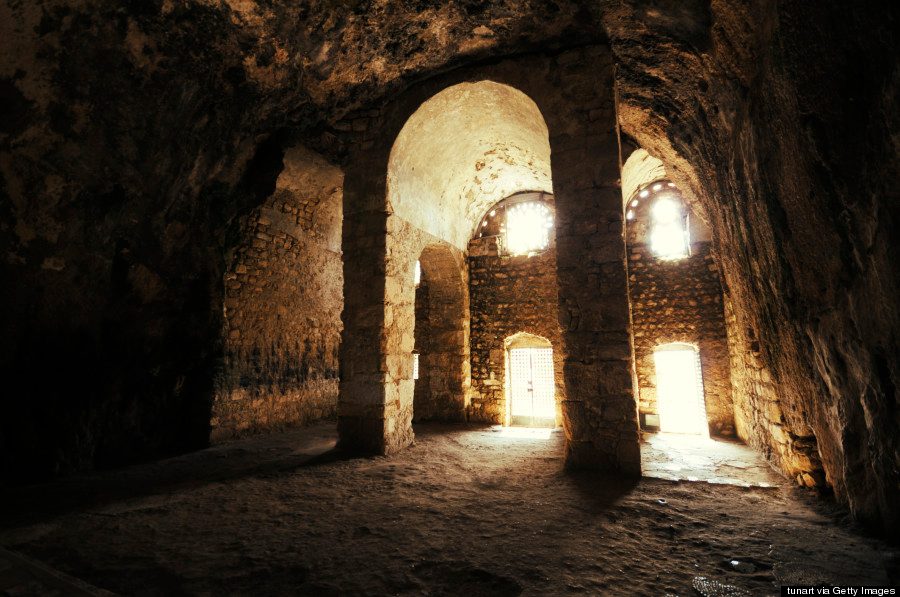
Walk toward the deeper tunnels to capture the play of light against the craggy stone ceilings and religious iconography. Use a wide-angle setting to document the cavernous scale of these underground spaces while on your cave church and garbage city tour tours.
Position your camera to frame the hanging altar and the natural stone archway that leads into this specific prayer area. This spot is essential for those securing cave church and garbage city tour tickets to document the most intimate sections of the monastery.
Visiting the cave church and garbage city tour provides families with a unique perspective on the resourcefulness of the local Zabbaleen community. This impressive site carved into the Mokattam Mountain is a profound educational experience for children to witness history and faith integrated into daily life.
The complex is stroller accessible, allowing parents to navigate the main areas of the monastery with ease
Plan your visit between 09:00–12:00 to enjoy the best natural light for photography and cooler temperatures before the midday heat
Since navigation through the narrow streets of the local district can be challenging, booking organized cave church and garbage city tour tours is highly recommended for a stress-free family experience
You will find a clean cafeteria with shaded seating areas near the site, which is helpful when taking breaks during your cave church and garbage city tour tour
Ensure you secure your cave church and garbage city tour tickets in advance through reputable operators who include private, air-conditioned transportation to the mountain.
Dining options directly within the Mokattam settlement are extremely limited, so most visitors planning a cave church and garbage city tour prefer to eat in central Cairo. As you complete your Cairo landmarks exploration, you will find more established restaurants a short drive away from the mountain district.
Located near the Citadel, this restaurant offers traditional Egyptian grilled meats and views suitable for travelers finishing their cave church and garbage city tour tours. It provides a comfortable environment for groups needing a full meal after their morning visit.
Everything you need to know for your journey
The site is open daily from 09:00–17:00.
Entry is 0 EGP, though donations are welcome to support the local community.
Individual visitors do not require cave church and garbage city tour tickets for entry, but guided groups should book via local operators.
The steep, rocky terrain makes parts of the cave church and garbage city tour difficult for those with limited mobility.
For the best light and cooler temperatures, arrive between 09:00–12:00 for your cave church and garbage city tour.
Yes, families are welcome, but be mindful of the industrial surroundings during your cave church and garbage city tour.
Dress modestly, covering shoulders and knees, to respect the sanctity of the cave church and garbage city tour site.
Personal photography is permitted, but please be respectful of the community during your cave church and garbage city tour.
There are no dining facilities, so we recommend carrying water during your cave church and garbage city tour.
A massive medieval fortress overlooking Cairo.
Wide selection of mid-range and boutique hotels.
Known for historic mansions and luxury stay options.
A greener, residential area with quiet boutique lodgings.
Join thousands of happy travelers who have discovered this incredible experience
Book Your Experience Now